
The Motherland Influence: June 22, 2025 5:00-7:00 PM

Kassé Mady Diabaté 1949-2018, Not my photo.
WELCOME!
Mali celebrated its independence from French colonial rule on June 20, 1960. Modibo Keita was appointed as president on September 22, 1960. President Modibo Keita was re-elected by the National Assembly on May 13, 1964.
In the 1960s and early 1970s, musicians and musical groups from different African nations and cultures went to Cuba and to the Caribbean to study music and to work with local musicians.
One such group to work and study in Cuba in the 1960s was Les Maravillas de Mali. They played a Malian music very much influenced by Cuban music which was popular in much of Sub-Saharan Africa.
Upon their return around 1970, they were joined by an extremely talented singer, Kassé Mady Diabaté.
In 1968, Moussa Traoré led a military coup and became known as an authoritarian. He mandated a return to the authentic music and culture of Mali. Traoré had Les Maravillas disbanded and their musical director was replaced. The group maintained most of its original members and eventually change its name to the National Badema and Kassé Mady became a revered star, dubbed “The Golden Voice of Mali”.
In 1991, Traoré was arrested by his own troops and replaced by Amadou Toumani Touré, the leader of the coup. Touré served as interim president until he was elected president in 2002 and was known as the first real democratic leader. The presidential term in Mali is officially two years but Touré served until 2012. There have been six heads of state in varying capacities since then, some serving much more than two years, some serving for only days or months.
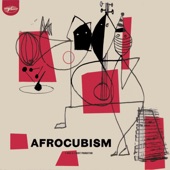
On today’s program I’ll feature music by the late great Malian singer Kassé Mady Diabaté for the first hour, starting with a Cuban-influenced song – for context – by Les Maravillas recorded before their return to Mali under the direction of the influential Bocana Maiga. Time permitting, we will hear his music from some of the albums that he recorded with National Badema in the 1970s, in Europe in the late 1980s under his own name and from the 1990 album Afrocubism, recorded in London, on which he sings and is joined by famous Malian and Cuban musicians, some tracks form albums recorded following his return to Mali in the late 1990s. We’ll end the hour with a track from the newly released album that he recorded with his daughter Hawa Diabaté, recorded shortly before his passing.
The second hour will feature a mix of African, Latin & Caribbean music,
Show archive
Playlist
-
Mose Fan Fan & Orchestre Somo Somo, “Hello Hello (program theme song)”
from Hello Hello
Sterns - 1995
RDCongo
-
Las Maravillas de Mali, “Radio Mali”
from Maravillas de Mali sous la direction Bocana Maiga
Maestro Sound
Mali
-

-
-

-

T.P. Orchestre Poly Rythmo, “Gendamou Na Wili We Gnannin”
from Singles & Eps
Acid Jazz UK - 2022
Benin
-

Vincent Ahehehinnou, “Best Woman”
from Best Woman (Analog Africa Dance Edition No. 5)
Analog Africa - 2017
Benin
-
Trinidad Trio, “Traveling Man”
from Best of Straker's: Ah Feel to Party
Rounder Reords - 1996
Trinidad
-

Lord Executor, “I Don't Know How the Young Men Living”
from Calypsos from Trinidad: Politics, Intrigue and Violence in the 1930s
Arhoolie Records - 1991
Trinidad
-

Alex Rosa, “L’appel Des Champions”
from Mizik Maladi: Disques Debs International Vol. 3
Strut - 2025
Martinique/Guadeloupe
-
Horizon, “Ti Malo”
from L'Esprit Ka: New Directions in Gwoka Music from Guadeloupe 1981-2010
Time Capsule and Seance Centre - 2021
Guadeloupe
-
-
Etoile de Dakar featuring Yossou N' Dour & Hadji Faye, “My Wa Wa”
Sterns - 1996
Senegal